
Tinplate / SPTE for PCB Shielding Cans
Tinplate / SPTE is a cost-effective material for custom PCB shielding cans, offering very good solderability, stable stamping performance, and reliable EMI shielding for high-volume electronic assemblies.

Hexin > Tinplate / SPTE for PCB Shielding Cans

Tinplate / SPTE for PCB Shielding Can Manufacturing
Tinplate, also known as SPTE, is a cold-rolled steel sheet coated with a thin layer of tin. In PCB shielding can manufacturing, it is commonly used for cost-effective EMI shielding structures that require very good solderability, stable stamping performance, and reliable grounding to PCB ground pads.
For one-piece shielding cans, two-piece frame and cover designs, and custom stamped EMI shields, tinplate provides a practical balance between material cost, soldering performance, and mass production efficiency. It is widely used in communication devices, RF modules, consumer electronics, industrial control systems, and automotive electronic assemblies.
—Explore our standard PRODUCTS and quickly find the right fit for your PCB design
Why Tinplate Is Used for PCB Shielding Cans
Excellent Solderability
The tin-coated surface supports reliable solder joints between the shielding can and PCB ground pads during reflow or wave soldering.
Stable Stamping Performance
SPTE material supports precision stamping, bending, and forming for one-piece and two-piece PCB shielding can structures.
Suitable for Custom Shield Structures
Tinplate can be used for custom sizes, low-profile designs, frame and cover structures, and stamped EMI shielding covers.
Cost-Effective
Tinplate is suitable for high-volume PCB shielding can production where material cost, stable quality, and production efficiency are important.
Reliable EMI Shielding
When properly grounded to the PCB, tinplate shielding cans help reduce electromagnetic interference in compact electronic assemblies.
RoHS and REACH Compliance
Tinplate PCB shielding cans can be supplied with RoHS and REACH compliant material documentation upon request., cadmium, and hexavalent chromium.
Tinplate / SPTE vs Nickel Silver vs SUS for PCB Shielding Cans
Compare common materials used for custom PCB shielding cans, including tinplate / SPTE, nickel silver C7521 / C7701, and SUS stainless steel.
Tinplate / SPTE is commonly selected for PCB shielding cans when good solderability, stable stamping performance, and cost-effective mass production are required. Compared with nickel silver and SUS stainless steel, tinplate provides a practical balance between material cost, soldering performance, and manufacturing efficiency.
| Item | Tinplate / SPTE | Nickel Silver C7521 / C7701 | SUS / Stainless Steel |
|---|---|---|---|
| Cost | Lower | Higher | Medium |
| Solderability | Very good | Good | Needs plating |
| Corrosion Resistance | General | Better | Excellent |
| Stamping Performance | Good for stamping and bending | Good, especially C7521 | High strength, harder to form |
| Plating Requirement | Tin-coated surface | Often no extra plating needed | Tin or nickel plating recommended for soldering |
| Dimensional Stability | Good | Excellent | Excellent |
| Best For | Cost-sensitive PCB shielding cans and high-volume production | High-reliability PCB shielding cans and RF applications | High-strength shielding covers and corrosion-resistant applications |
Material Selection Summary
For most cost-sensitive and high-volume PCB shielding can projects, tinplate / SPTE is a practical material choice because it offers very good solderability, stable stamping performance, and lower material cost.
If your application requires better corrosion resistance, surface stability, or long-term reliability, nickel silver C7521 / C7701 may be a better option. For higher mechanical strength or harsh environments, SUS / stainless steel can also be considered, but additional plating is usually needed for soldering to PCB ground pads.
Related PCB Shielding Can Types

oen piece shield can
Simple structure, cost-effective, suitable for low-profile designs and direct soldering.

two piece shield can
Easy for rework and inspection; ideal for modules requiring frequent access.

dEEP dRAWN SHIELD CAN
Formed by stamping without joints, providing higher strength, better shielding, and smoother appearance.
Tinplate PCB Shielding Can FAQ
Tinplate (SPTE) remains one of the most reliable and eco-friendly stamping materials for PCB shielding cans and enclosures. At HEXIN, we ensure every part meets strict flatness, solderability, and environmental standards. Whether you need prototype samples or mass production, our engineering team is ready to support your project with quick response and technical expertise.
Is tinplate suitable for PCB shielding cans?
Yes. Tinplate / SPTE is widely used for PCB shielding cans because it offers very good solderability, stable stamping performance, and cost advantages for mass production.
Can tinplate shielding cans be soldered to PCB ground pads?
Yes. The tin-coated surface provides good wetting performance during reflow or wave soldering when proper soldering conditions and flux are used.
Is SPTE material environmentally compliant?
Yes. All our tinplate materials meet RoHS, REACH, and California Proposition 65 requirements. They are free from lead, cadmium, and other restricted substances, ensuring full environmental compliance.
What thickness is commonly used for tinplate PCB shielding cans?
For PCB shielding cans, common tinplate thickness is usually around 0.10 mm to 0.30 mm, depending on the shield size, height, flatness requirement, and mechanical strength.
Is tinplate better than nickel silver for shielding cans?
Tinplate is usually more cost-effective and offers very good solderability. Nickel silver provides better corrosion resistance and dimensional stability, making it more suitable for high-reliability PCB shielding cans.
Can tinplate be used for both prototype and mass production?
Yes. Tinplate can be used for prototype samples and mass production. The process can be selected based on quantity, drawing requirements, tooling cost, and delivery schedule.
Does tinplate require additional plating?
Normally no. Tinplate already has a tin-coated surface. However, additional treatment may be considered if the design requires special corrosion resistance, appearance, or soldering performance.
Why Choose Hexin
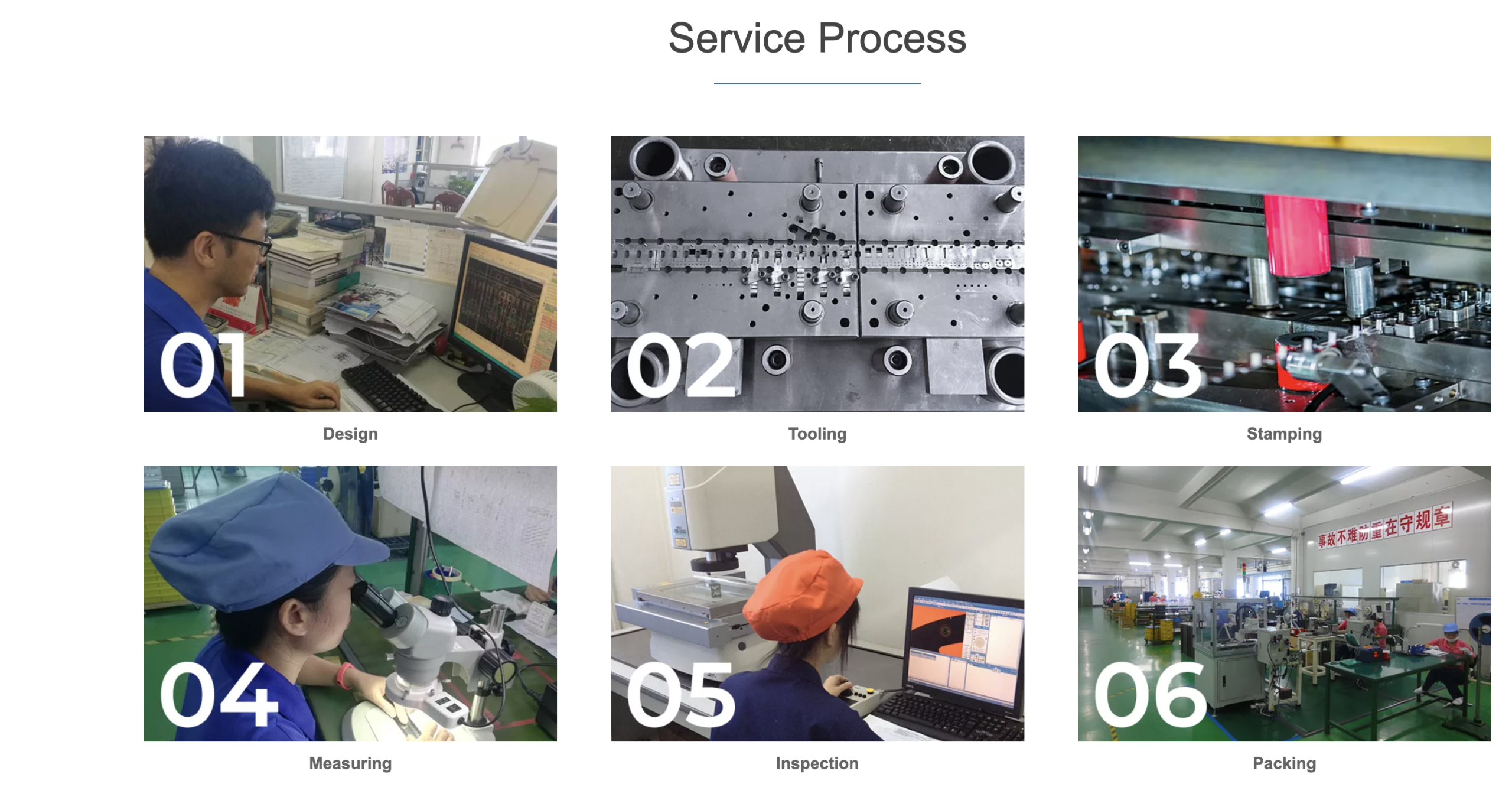
Hexin supports custom tinplate PCB shielding can manufacturing from material selection and prototype validation to tooling design, precision stamping, surface finishing, inspection, and mass production. For SPTE shielding cans, we help engineers balance solderability, material cost, flatness, grounding performance, and production stability.
Material Selection Support
We help engineers choose between tinplate, nickel silver, SUS stainless steel, copper alloy, and aluminum based on solderability, cost, corrosion resistance, and application requirements.
Prototype and Tooling Capability
We support prototype validation, stamping samples, progressive tooling, and mass production for custom PCB shielding cans.
Precision Stamping Manufacturing
Our production process supports one-piece shields, two-piece frame and cover structures, stamped covers, and low-profile PCB shielding designs.
Quality and Documentation
We provide dimensional inspection, flatness control, solderability review, and RoHS / REACH documentation upon request.


Tinplate / SPTE PCB shielding cans can be supplied with RoHS and REACH documentation upon request. For projects requiring additional material verification, third-party test reports such as SGS or CTI can also be provided based on customer requirements.
Start Your Shielding Can Project
Send us your drawing, PCB layout, 3D file, or sample. Our engineering team can help review the material, structure, flatness requirement, soldering process, and production method for your custom shielding can project.
Email Us
Sales@k-sunrise.com
Call Us
8613780042551